Vow Keepsake Studio · buyer guide
Counting seating chart panels and table numbers
For Vow Keepsake Studio worldwide orders, guest names determine the content that must be arranged, not the physical panel count by themselves. The number of chart panels depends on the approved grouping and actual proposed layout. Count table-number signs separately from those panels, using the selected venue plan rather than multiplying every guest by a sign quantity.
Reviewed 2026-09-05 · AI-assisted editorial review. General buying guidance; illustrative scenarios are not customer case studies. Images are AI-generated concepts.
Start with the approved list and decide how guests will find their tables. The planner may choose an alphabetical display, table-based grouping or another reviewed approach. The design must show how the actual names fit the chosen format. This guide does not prescribe a universal names-per-panel limit.
Ask the maker to propose the physical arrangement using the real approved strings, including long names. A neat sample containing short placeholders cannot establish the final panel requirement. Keep the content count and physical-object count in different columns until the layout is accepted.
How should table-number signs be counted?
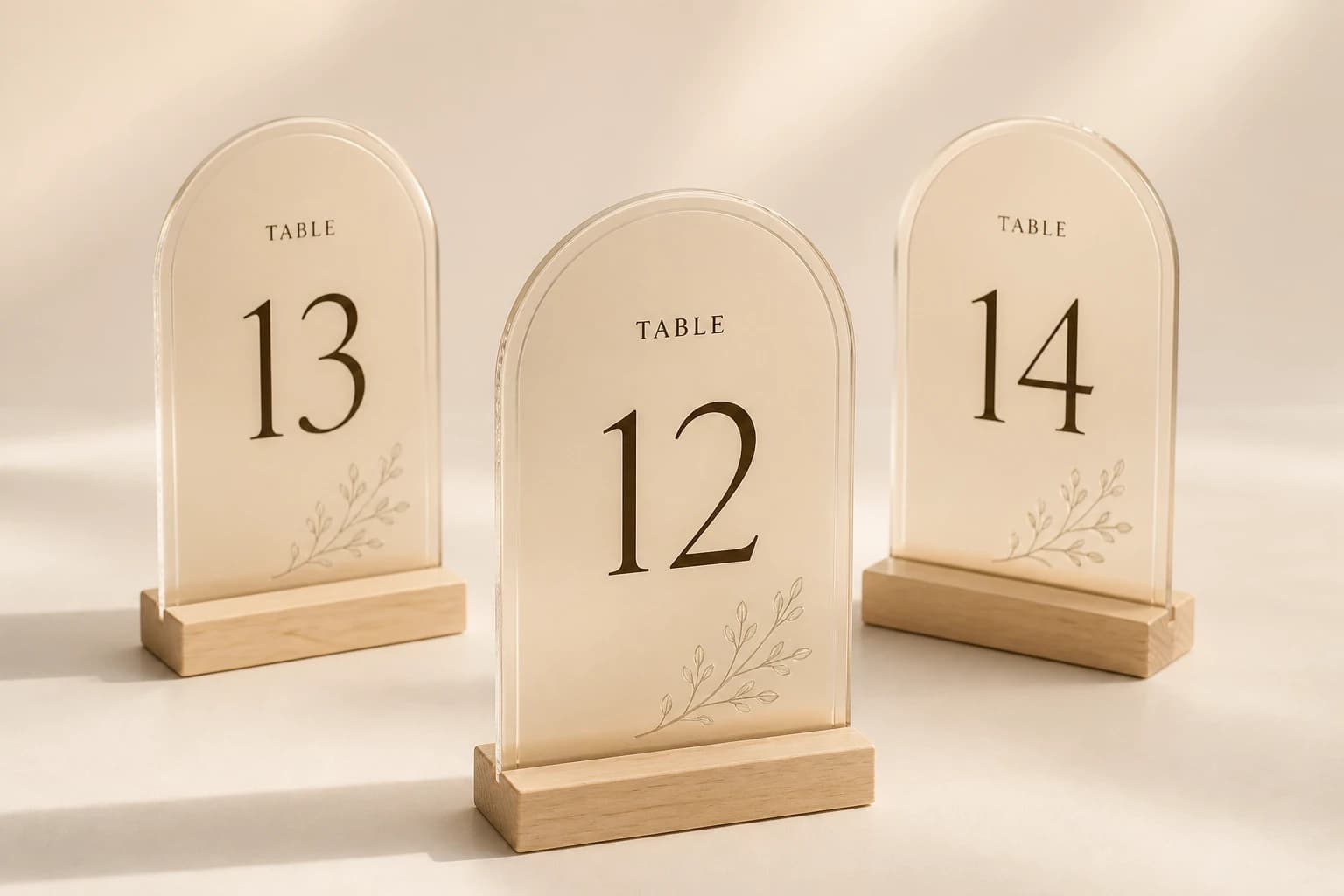
Count one or more physical markers for each table only as specified in the approved room plan. A table name, a number and a reserved-service marker are different content choices and may have different quantities. The planner should identify the actual placements before entering a multiplier in the calculator.
Keep table references stable while the guest allocation changes. Moving a guest from one table to another may change chart content without changing the number of table markers. Adding a new table can change both the marker count and the chart arrangement.
If a table is split, merged or removed, update the physical schedule explicitly. Do not keep a sign for a table that no longer exists merely because it was included in an early count. Retain the change history so the revised total is understandable to the maker and receiving team.
What must the chart proof show?
The chart proof should show every approved name, its table assignment and the physical panel on which it appears. Review the complete panel set rather than isolated text columns. A correctly spelled name on the wrong table is still an error, and a correct assignment can be missed if its panel is omitted.
Use a panel reference and a selected revision for each physical piece. If the chart uses several panels, identify their display order and any headings that help the set make sense. Keep the panel arrangement connected to the actual venue display proposal.
The couple or designated planner should approve the guest content, while the design and venue reviewers assess the physical presentation. A numerical count of names does not approve readability, support or placement. Those questions need the actual proposed dimensions and complete design.
Illustrative example: How do three seating-chart panels and twelve table markers total fifteen?
The fictional example uses three seating-chart panels and twelve table-number signs. Three plus twelve equals fifteen physical pieces. The calculator counts twelve tables with one marker each and three additional chart panels, with no spares. It returns fifteen total pieces; it does not calculate the number of names that fit a panel.
The worksheet keeps the chart and table-marker groups separate. The three-panel assumption is illustrative and must be replaced by the approved layout for a real wedding. No guest count or physical-fit capacity is inferred from it.
If the final chart fits two accepted panels, the physical total becomes fourteen while the twelve table markers remain unchanged. If a thirteenth table is added, add its marker and review whether the chart still fits its accepted panel arrangement. One change can affect two records without requiring the same numerical adjustment to both.
How should late seating changes affect the order?
A late guest move should identify the affected name, old table, new approved table and relevant chart panel. The table-marker quantity changes only if the physical table plan changes. Keep those two consequences separate so a content correction does not automatically create unnecessary replacement markers.
Ask the maker about the actual production state before assuming a chart can still be revised. A new proof, accepted hold and completed remake are different states. The planner should communicate the current confirmed option rather than promise that a small text change has no cost or timing effect.
For a multi-panel chart, request the full revised panel set or a clear index showing which panels remain unchanged. This prevents an old panel from being displayed beside a corrected one at the venue. The final selected revision should be easy for the setup owner to identify.
Count chart panels and table-number signs
Load the fictional worked example, then replace every assumption with your approved project inputs.
Method: Calculate only the entered physical counts. The result does not choose specifications, authorize wording or reserve production.
Build your plan
Count separate dining areas and event layouts before entering the table total. Spares are an explicit input.
Use the article’s example files
Fictional example rows show how to separate physical quantities, wording and approval references. Replace them with your project schedule. HOLD and SAMPLE entries are not production instructions.
What should the quote and packing list contain?
The quote should list physical chart panels and table markers as separate groups, with dimensions, content work, supports, packaging and delivery specified. The packing list should preserve panel order and table references. A correct total of fifteen does not prove that all twelve table labels and the three selected chart panels are present.
Ask whether stands, frames or other display components are included or supplied by the venue. A concept image can show an arrangement without establishing the order scope. Confirm the actual receiving and setup contacts so the correct pieces reach the approved locations.
For Vow Keepsake Studio support, retain the final panel map and table plan together. A request for another Table 8 marker is different from a corrected chart panel listing guests assigned to Table 8. Naming the physical object and selected revision makes the remedy concrete.
What should remain in the final seating record?
Keep the selected table plan, chart revision and physical panel map connected. A later correction should identify which panel and table references are affected rather than reopening every sign. Retain only the guest information needed for the authorized event workflow.
For a Vow Keepsake Studio replacement, state whether it reproduces the final approved chart or implements a newly approved seating change. A current guest list can differ from the version originally released, so the purpose of the request must be explicit before artwork is copied.
How do you handle duplicate guest names on the chart?
Keep guests with the same visible name as separate approved records and confirm how the couple wants them distinguished, if a distinction is needed. Do not merge them to make the list shorter. The chart must preserve the intended table assignment without adding unnecessary personal details that the couple has not approved.
Use stable internal references while preparing the artwork, even if those references never appear publicly. A spelling correction for one guest should not automatically alter another person with the same name. The planner should identify the exact record and affected panel in the change request.
Ask the couple to approve any visible qualifier before it is added. A family relationship, middle initial or other distinction can be personal information and should not be invented by production. After layout, check both records in the complete panel set. The correct total of names can still hide an accidental merge or a duplicated assignment.
Which option fits this order?
Guest records, chart panels and table markers are three different quantities. The first supplies content, while the other two describe physical deliverables. Keep their relationship visible in the approved schedule so a change to names or assignments produces only the physical changes the actual layout requires.
| Option | Useful when | Scope to resolve |
|---|---|---|
| Guest list | You need the approved names and assignments for the chart. | Exact display strings, duplicates and selected table allocation. Seatbee discusses seating charts and table numbers. |
| Chart panels | You need the physical pieces carrying the arranged guest information. | Actual-size layout, panel order and included supports. |
| Table markers | You need visible identifiers at the approved tables. | Final table plan, quantity per placement and exact labels. |
Sources: Seatbee: Wedding Signage Checklist
What should buyers confirm before ordering?
Guest names, seating-chart panels and table markers are different counts. The quote needs the approved physical layout, while content review must preserve each person’s selected table. These answers explain panel capacity, late moves and setup checks so a correct number of pieces does not hide a duplicated label or outdated chart revision.
What determines the price of a seating-chart and table-sign order?
Vow Keepsake Studio quotes should separate the price per chart panel from the price per table marker. Physical dimensions, the actual name-layout work, personalization, supports, packing and delivery affect the proposal. A guest count alone is not a complete quote unit and does not establish how many panels the final readable design needs.
Does every guest need a separate chart piece?
No. A seating chart can place many approved names on one or more physical panels. The actual panel count comes from the accepted layout, not a one-piece-per-guest assumption. Separate place cards, if wanted, are another explicitly scoped product group and should not be hidden inside the chart quantity.
Does moving a guest change the table-number order?
Only if the physical table plan changes. A move between existing tables usually changes chart content while the same table markers remain needed. Identify the affected panels and ask about production state before assuming the correction can be made without additional physical work or timing changes.
Can the calculator tell how many names fit a panel?
No. The example loads an illustrative three-panel decision already made for counting. Real panel capacity depends on the actual text and proposed layout and must be reviewed at the intended physical size. The calculator only adds the entered physical quantities.
What should the setup owner check at the venue?
Check the selected panel revisions, their display order and the complete set of approved table labels against the final plan. A matching grand total can still hide a duplicated table number or an old chart panel. Keep the packing references with the setup instructions so each object can be identified.
Sources and scope
The sources below support the cited technical details. The ordering workflows are editorial recommendations. Your project specification, price and schedule are established in the written quote and approved proof.
- Seatbee: Wedding Signage Checklist · checked 2026-09-05
Which buying guide should you read next?
All buying guidesVow Keepsake Studio guest-list revisions should affect only the dependent seating artwork, while stable keepsake proofs retain their own approvals. For worldwide weddings, identify the changed guest record, selected panel and actual production state before requesting a correction. A new spreadsheet is not automatic permission to remake every item in the order.
Vow Keepsake Studio destination-wedding displays need a named receiver before arrival and a named owner after the celebration. For worldwide orders, confirm the venue’s actual acceptance and collection arrangements separately from the couple’s artwork approval. A parcel marked delivered does not establish that the right person inspected, set up or took home each piece.